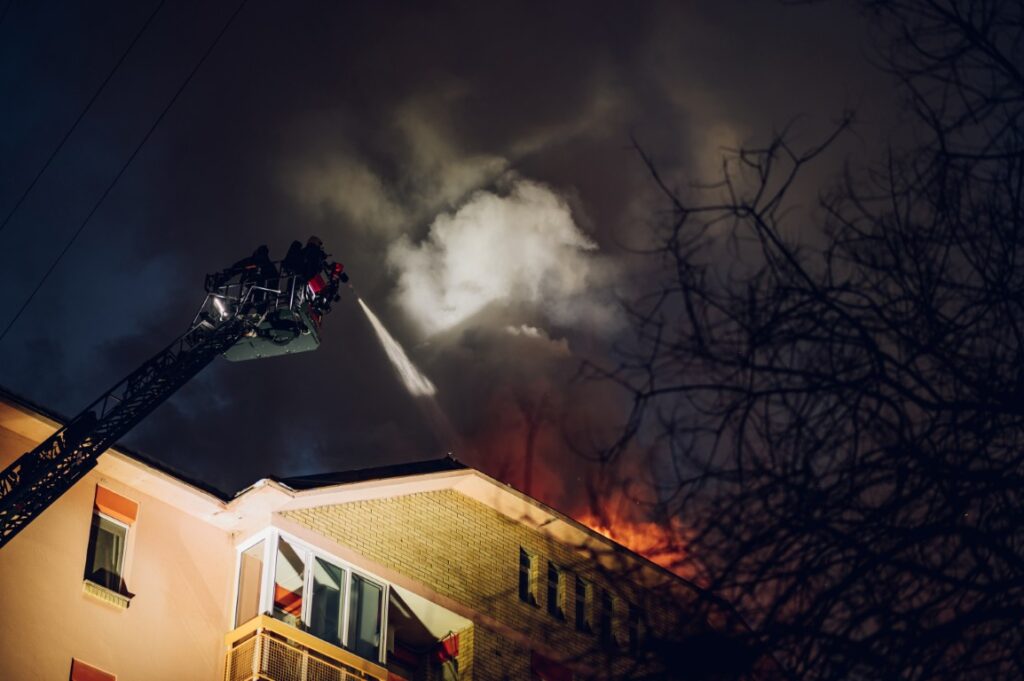
House fires and fires at businesses can cause significant damage, from smoke damage to harm to the physical structure of the building. Even the efforts made by local fire departments to stop fires can cause serious damage, including water damage and broken windows.
If your home or business has been damaged by a fire, and you have a valid property insurance policy, you should be able to seek compensation for fires caused by accidents. Keep reading to learn more about the claims process, the compensation owed for valid claims, and when you should get help from a Texas law firm.
After a house or business fire, there are steps you can take to protect your insurance coverage and start the claims process effectively. To file a fire damage claim successfully, you must act quickly, document everything, and maintain clear communication with your insurer. Follow the steps below to ensure a smooth claims process:
Contact your insurer immediately to report the loss as soon as practically possible to avoid violating policy conditions. Try to get in touch with your insurance provider within the first 24–48 hours after a fire to report the incident and initiate your claim, as this helps avoid delays and ensures your account of the loss is documented while details are fresh. Delaying notification to your insurance company can lead to a denial of your claim.
Immediately after a fire, ensure everyone's safety and do not re-enter the property until it is deemed safe by the fire department. In the weeks after a fire, document the damage thoroughly with photos and videos, and create a list of all personal property that was destroyed or damaged, including estimated values and purchase dates if possible. Take comprehensive photos and videos of all structural damage before throwing anything away or doing any repairs. Keep receipts for emergency expenses, temporary housing, and clothing as they are important for your claim.
Insurance companies require formal verification of the loss, including an Official Fire Report, visual evidence, and a detailed inventory. Accurate estimates for repairs are essential to ensure your settlement covers actual costs, and collecting multiple estimates can help demonstrate the true cost of repairs and prevent undervaluation by the insurer.
You will have a limited amount of time after your property was damaged in which to file a claim for damage or lost items. You will need to provide a detailed report of the damage and repair estimates, and ensure your documentation is complete. Your insurer will assign a claims adjuster to assess the damage.
Once your adjuster submits their report, the insurer begins reviewing the claim against your policy, and they may request additional documents or question the scope of damage. Document every interaction with your insurance company, including the date, time, names of representatives, and details of the conversations.
If you have a commercial or homeowners’ insurance policy, accidental fire damage will typically be covered. While the specifics of your compensation will depend on your coverage limits, these types of claims often result in the following types of compensation:
Most homeowners' insurance policies provide coverage for repairs or rebuilding costs for walls, roofs, and fixtures damaged by fire, aiming to restore the property to its pre-loss condition.
Fire insurance policies often include coverage for debris removal and clean-up, which helps pay for the safe removal of hazardous materials left after a fire.
Additional Living Expenses (ALE) coverage is commonly included in fire insurance policies, which helps cover temporary housing, meals, and other living costs while the home is being repaired.
There are two primary ways that insurers calculate compensation for property damage: actual cash value (ACV) and replacement cost value (RCV). While RCV is meant to compensate policyholders for the full cost of repairs or replacement, ACV takes into account the depreciated value of the property, meaning you will receive a smaller payout.
Insurance companies may deny claims for valid reasons such as alleged negligence, uncovered causes, or errors in documentation, which can be financially devastating for homeowners. However, homeowners and businesses often also face common bad faith issues with fire damage claims, including delays in processing, lowball estimates, partial denials, and outright claim denials. Common bad faith tactics include:
Legal action may be necessary if your insurer is acting in bad faith, such as delaying without justification or misrepresenting policy language. If your fire damage claim is denied or underpaid, you have the right to challenge the decision, and doing so can often result in a higher recovery.
Consulting a fire damage claim lawyer can help you navigate disputes, delays, or underpayments, ensuring your rights are protected and your claim is fully supported. If your insurance company is acting in bad faith, it’s time to get help from a capable fire damage claim attorney.
From lost personal belongings and structural damage to temporary dwelling coverage, our experienced team can help you get full compensation for your valid claim. We can gather essential evidence, such as accurate repair estimates and testimony from insurance experts, and build a strong case for a fair payout. Millin & Millin Attorneys is ready to help you reach a satisfactory and timely resolution.