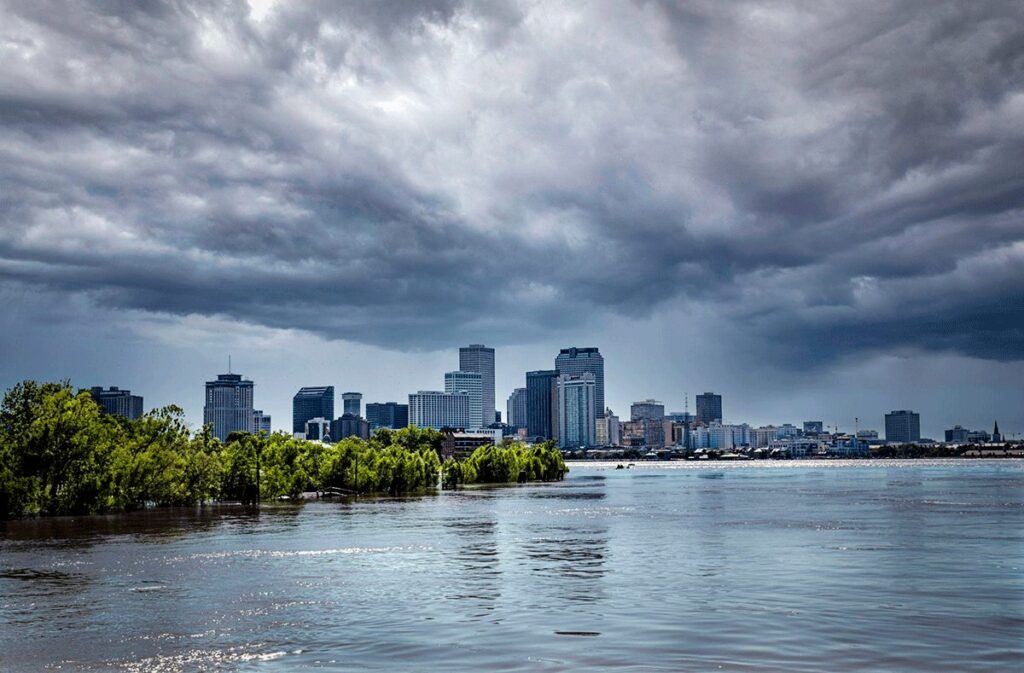
Gulf Coast living provides many exciting recreational activities that the land-locked residents of most other states do not get to experience. But these opportunities come with a risk; warm-water hurricanes.
Homeowners know they must prepare for these events, and that includes knowing how to purchase insurance that will help you rebuild in case your part of the state faces the might of a strong storm.
A storm can cause structural damage in a number of ways.
What first comes to mind is flooding, a catastrophe that is not covered in your typical homeowner’s insurance. Instead, an additional insurance rider must be purchased — flood insurance. If your homeowner’s insurance agency doesn’t participate in this federally-regulated insurance market, you can reach out to the National Flood Insurance Program directly to find a local agent and policy for you.
Another form of storm damage that must be considered is wind and hail. Again, these are catastrophes that are not usually covered in a typical homeowner’s policy! Homeowners must be aware of what is covered in their home insurance policy, and what is excluded. Protection against wind and hail damage is usually an additional expense item that must be added to a plan.
If your insurance does not offer this option, you may have to buy an additional insurance plan for your house from the Texas Windstorm Insurance Association.
If you cannot find the insurance protection you need for your home, look toward the Texas Fair Access to Insurance Requirements Plan, also known as the Texas FAIR Plan. They can help you purchase basic insurance for your home after you’ve been denied coverage by other insurance companies.
How to Make Your Home Insurance Work for You
Now that your home is covered, you should prepare for the worst-case scenario by starting the documentation you’ll need in case any sort of home damage does occur.
Create a list of the property you own, and then update the list regularly. Try to include information about when expensive items were bought, their price, and their serial numbers.
Most household items can be included in your list of property damaged from a storm, including spoiled food, so having this list will help you substantiate your claim in the future. Keep this list in a fire and water-proof container, and also keep any photographic evidence of your home’s valuables secure for future use.
Finally, be sure to stay on schedule with paying your insurance premiums. Do not allow insurance companies the opportunity to deny your damage reimbursement because of this basic requirement!
While we hope that our region will be able to avoid any major storms this hurricane season, we also want to ensure that the people of the Rio Grande Valley are fully prepared. Should your home suffer severe damage caused by a storm and you cannot secure the coverage to you, do NOT hesitate to contact the experienced insurance claim attorneys of Millin & Millin.
Get on the path of recovery by calling the legal experts of Millin & Millin today at (956) 631-5600.
The pandemic has affected all of us in a wide variety of ways, few of them good. Along with the wave of harmful events that affected businesses and individuals alike came a wave of insurance claims related to that harm. Unfortunately, proving your right to compensation can be difficult, and insurance companies will often do what they can to minimize or outright deny you what you’re owed.
Because of this, it’s important for all Texans to know their rights and what they can do if those rights are challenged. Today, your committed McAllen bad faith insurance attorneys at Millin & Millin will explain how knowing your rights is the first step in protecting yourself.
The legal rights that each of us has in the U.S. are complex and varied, but one major component is our ability to seek damages for harm inflicted upon us. This includes instances such as suing for car accident damages or damages caused by a crime, while also including harm caused by negligence rather than direct action. Negligent harm occurs when an entity fails to fulfill its obligation to keep you reasonably safe.
There are many entities that owe you a guarantee of safety. Each time you enter a grocery store or walk through a parking garage, the owners of those properties are responsible for taking action to protect you from foreseeable harm. This includes using cameras, keeping floors clean, and providing adequate lighting.
You can also be a victim of harm when an entity sells you a faulty product or drug. In these cases, the seller has a responsibility to provide you a reasonably safe product. If they fail to do so, then you have the right to seek damages for any harm that you suffer as a result of using their defective product.
While the aforementioned rights laid out primarily deal with physical injuries, you also have rights related to your property. Some of these rights are directly related to the examples above. For instance, property damage might be included in car accident compensation along with compensation for medical expenses.
In most cases, the compensation awarded to victims comes from an insurance claim, but those claims are usually made with the insurance company of the at-fault party. For example, if someone else causes your car accident, their insurance policy is meant to cover the damages. Similarly, if you are injured in a place of business, the insurance policy of the business owner should cover your costs.
However, there are other insurance claims that you will need to make under your own policies. These claims include claims for business interruption, property damage, and other types of business-related harm covered under your specific policy.
You have the right to make a claim against any type of damage covered in your insurance policy. Unfortunately, your insurance company may attempt to stall, mislead, or flat-out lie to you in order to avoid paying what they owe. In that case, you have the right to seek the assistance of a bad faith insurance lawyer to help you hold your insurance company accountable.
In many of the cases laid out above, getting the compensation you need comes down to whether or not the insurance company involved is going to act fairly. Because of this, it’s important that consumers and business owners have access to the legal representation of bad faith insurance attorneys.
Whether your house burned down or your business closed, you’re probably going to be making an insurance claim. If you feel that your insurance company is treating you unfairly or refusing to pay what you are owed, reach out to the McAllen bad faith insurance attorneys of Millin & Millin for help fighting back.

The past few years have seen a few devastating hurricanes cause massive amounts of damage to Texas’ coastal region. While we here in the Rio Grande Valley have been fortunate to avoid any catastrophes, the reality is that a major storm can eventually hit our region.
That’s why being prepared this hurricane season is so important.
You not only want to have a plan in order to protect yourself and your loved ones, but you also want to make sure that you have the right insurance coverages in place so that you don’t have to handle the costs of hurricane damages all on your own.
Let the dedicated bad faith insurance claim attorneys of Millin & Millin provide you some tips that can help to minimize any storm damages while also giving you insight into additional insurance policies you may need to purchase.
Before a hurricane or tropical storm hit, you’ll want to take the proper steps to protect your home and property.
a. Inspect your roof for any damages such as leaks, loose or missing shingles, cracks, or other signs of roof damage that could become a major issue should a hurricane strike. Get it fixed as soon as possible.
b. Double check that your windows and doors are properly sealed with caulking.
c. Check your home’s gutters and drains for any damages that can lead to water leaking into your home.
d. Clean up your yard including trimming loose branches and placing loose objects into a storage room or home.
If a storm is definitely going to hit the region, you’ll want to protect your windows by using plywood or having storm shutters installed if possible.
Alongside physically preparing your home for a storm, you’ll want to make sure you have the right insurance coverage.
Many homeowners do not know exactly what their insurance covers and this can lead to a world of financial trouble if they aren’t careful.
Generally speaking, home insurance policies typically do not cover flooding and certain other damages that can occur if you live in an area prone to hurricanes, tropical depressions, or floodings. To ensure you are fully protected, start investigating as to whether or not you will need:
While we hope that our region will be able to avoid any major storms this hurricane season, we also want to ensure that the people of the Rio Grande Valley are fully prepared. Should your home suffer severe damage caused by a storm and you cannot secure the coverage to you, do NOT hesitate to contact the experienced insurance claim attorneys of Millin & Millin.

Workers’ compensation is a form of insurance that allows for employees to seek out wage replacement and medical benefits in the case that they are injured or harmed in any manner while performing their work duties.
Every state has its own conditions and requirements for employees who are attempting to file for these benefits. If you are going to file for workers’ compensation in Texas, you’ll want to review all information available to you on the Texas Department of Insurance website.
You’ll be able to find guidance on how to seek workers compensation as well as the forms necessary to file a claim.
Alongside understanding the process of what to do when attempting to secure workers’ compensation, you’ll also want to know what NOT to do. Your bad faith insurance lawyers at Millin & Millin would like to share a bit of information regarding filing a workers’ compensation claim so that you can begin the process of healing and recovery.
If you wish to receive treatment, compensation, and benefits for your work-related injury, beware these common mistakes.
1. Not knowing if your employer has workers’ compensation insurance.
Although it is required by many states, in Texas, employers have the ability to opt-out of obtaining workers’ compensation, except if they are public employers or if they fall under special categories.
It is necessary for employers who choose not to obtain coverage to notify the Division of Workers’ Compensation (DWC) and to ensure all employees are well-informed about the lack of workers’ compensation. However, employers who fail to obtain workers’ compensation insurance (also known as nonsubscribers), are liable for workplace injuries and illnesses. If sued, nonsubscribing businesses cannot argue that:
Regardless of the circumstances surrounding the injury, you should know whether or not you are protected by workers’ compensation insurance or if you will have to seek out another legal route to obtain compensation for your injury.
2. Reporting your injury too late.
If you have suffered an injury while on the job, you should report the incident to a supervisor or manager immediately. Generally, accident policies - which contain information on who needs to be notified of your injury - can often be found in the company’s employee manual.
If your company does not have an accident policy, it is best to inform multiple parties about what has happened. This includes your manager, supervisor, co-workers, and also those in Human Resources.
Often employees cannot file for workers’ compensation because they failed to notify their employer within an appropriate time frame. The longer you wait to notify your employer, the more challenging it becomes to prove that the injury happened at work and not on your own personal time.
You should be aware that the law generally requires you submit a written notice to your employer within 30 days of the injury. Although this is several weeks worth of time, you should not wait the entire duration as it may raise red flags.
3. Missing the deadline to file a DWC Form-041.
Once you have reported your injury to your employer, the next important action to take is to file a workers’ compensation claim for a work-related injury or occupational disease.
You can file with the DWC online or in person, but you only have a year after the injury to do so. The organization will gather information concerning your work situation, injury, and status. You may then follow up with the Office of Injured Employee Counsel.
Missing the deadline can impact your ability to obtain benefits or how much you can collect. Make sure to file the DWC Form-041 as soon as you report your injury to your employer.
4. Not Receiving Medical Treatment
It is essential that you seek medical treatment for your work-related injury in order to receive compensation or benefits. Failure to describe all work-related injuries or be truthful with any medical professional providing you treatment can harm your claim and ability to secure benefits.
The employer or insurance will generally appoint you to a company medical provider. Even if you choose to get a second opinion, you must attend these initial appointments to assess work-related injuries.
Additionally, if you begin to obtain workers compensation benefits, but fail to attend sessions with appointed medical providers, benefits can be terminated.
Even employers that do have Texas workers’ compensation insurance may try to opt-out of giving you these benefits, try to deny your claim, or act in an unfair manner.

Even a well-organized construction project can run into issues and problems. Because there are often many different parties involved, from owners to contractors and subcontractors, disputes often arise. Some of the most common causes of construction disputes are contract errors or omissions, contract non-compliance, and site issues. While some disputes may be resolved quickly and without further issue, others may require the help of an experienced construction attorney.
The construction lawyers of Millin & Millin have the knowledge and the resources that you need on your side when a construction dispute arises. We will work hard to protect your interests and find a solution that is right for you. Don’t settle for an inexperienced attorney who does not understand the construction field. Turn to a team that has helped property owners, contractors, developers, vendors, and others resolve disputes and get the results they need. Contact us today at (956) 631-5600 for a free case evaluation.
There are many different reasons that a dispute may happen over the course of a project. A few common reasons include:
The building’s integrity is important for safety reasons but engineers must also take into consideration the desires of the customer. Lawsuits associated with design deficiency can result from a construction project that was poorly designed, inaccurately built, or left incomplete. Because of a deficiency, an entire project can be in jeopardy. Disputes between contractors and owners can lead to delays in completing the project and can dramatically increase the cost.
Imagine a scenario where an owner is excited or desperate to have a construction project completed in a time frame that may not be realistic. In an attempt to satisfy their new customer, a construction company accepts the contract and starts working as quickly as possible. Rushing through the process, engineers, architects, and contractors begin assembling plans to complete the project. However, they fail to realize that their blueprints are unorganized, their designs have fundamental flaws, and the timeline is virtually impossible. The problem may not be discovered until a lot of time and money has been wasted, and this can create a conflict that only a construction lawsuit may resolve.
The time it takes to complete construction is just as important as keeping the cost of materials within the budget. Managing the project’s timeline is not as easy as it sounds, especially when there are design deficiencies within the plan. Instead of efficiently completing the task at hand, time delays can create serious problems and even derail projects completely.
There are many opportunities for delays to develop over the course of construction work. Materials and equipment need to be ordered, delivered, and organized before the project can begin. Contractors will need to hire enough labor to complete the task efficiently, while also keeping costs low. Even the weather can present unique challenges and time delays. Disagreements between the various parties involved with the project also prevent work from taking place until the dispute has been resolved.
Meanwhile, the overhead costs of the entire project continues to rise. The owner may object to paying the difference in costs, and the contractors may be forced to make a difficult decision. In this instance, an unbiased ruling from a judge may be in the best interest of both parties.
Assuming the project was completed in a timely manner and within the allowed budget, the owner of the newly constructed building may still be unsatisfied. The owner’s problem with the finished product may be real or imagined, but the dispute is certainly authentic.
If an agreement cannot be made, then the affected parties may decide to file a construction lawsuit.
The unhappy owner may decide to withhold proper payment to the construction company, even though the design requirements were fulfilled. Another example could be that the project has been designated as complete but there are faults within the project’s construction. Whether the owner is justified in their complaint or not, the issue may need to be resolved in court.
Construction lawsuits are a civilized solution to complicated problems that develop when circumstances change. When construction companies act in bad faith, it is important to discuss the situation with a qualified bad faith lawyer.
Contact Millin & Millin today at (956) 631-5600 to schedule a confidential consultation.

With so many people and moving parts involved in a construction project, a single problem can derail an entire project. From construction companies to contractors and subcontractors, a number of different entities have an obligation to act in good faith and complete the job they’ve agreed to do in a timely manner.
Unfortunately, disputes happen all the time, leading to delayed jobs and potential litigation between parties. One common issue that arises is when subcontractors cannot complete the job they are assigned on time. In an ideal scenario, subcontractors tell you the truth about their ability to do the work, arrive at the construction site on time every day, and complete the job to the highest standard - saving general contractors money and stress.
But this is the real world and this isn’t always the case.
At Millin & Millin, we know that contractual issues can arise with any construction project. That’s why we are committed to helping represent general contractors and construction companies who have met construction disputes. Our team of insurance claim lawyers has in-depth knowledge about the construction industry and is ready to help you today.
One of the most important things to remember during the initial stages of a construction project is the value of communication and setting those expectations with contractors and subcontractors from day one. This ensures that everyone knows their roles and responsibilities, as well as deadlines.
Some additional tips for dealing with subcontractors include:
Before asking for a bid from a single subcontractor, make sure you put in the work and prequalify them before hiring. Look at their past work and make sure they can handle a project of your size and see if they have a history of completing their work on time.
You can also talk to other general contractors about the work they’ve done and what they may have heard said about the subcontractor. If a subcontractor you’ve worked with in the past asks why they didn’t get the job, be honest and explain your reasoning.
Once you’ve decided who will take the subcontracting job, it’s time to draft up a contract. Like all contracts, this legally binds the subcontractor to the job as well as other specified provisions. Along with containing the roles and responsibilities of the subcontractor, the contract should also outline all expectations and specifics of the project and work. Some other common things to cover in a contract include:
It’s also vital to remember that for most contracts, you are required to inform the subcontractor with a written notice of default, as well as a timeline for fixing the problem before you can supplement the work. Make sure to go over every detail of the contract before signing to ensure that all parties are aware of all aspects of the agreement.
If you need guidance writing up a contract, your expert legal team at Millin & Millin can help you develop a solid contract.
Subcontractors may not always come to you when they begin facing problems or experiencing difficulties on a project. That’s why general contractors should be aware of signs of trouble on a site.
You should monitor your subcontractors’ work and talk with them often (if possible on a daily basis) about their progress. Some common signs that your subcontractor could be running into problems include falling behind schedule, a sudden decrease in construction workers, worsening morale among workers, and missed or delayed payments from subcontractors to suppliers.
If you begin to see any of these warning signs, don’t hesitate to bring them up with your subcontractor immediately, even if the project appears to be going well. Maintaining an open environment where subcontractors feel the freedom to talk to you about problems is essential for avoiding any problems down the road.
Also, holding regular meetings is a great way to keep everyone in the loop on the status of the project and give subcontractors an opportunity to talk about any concerns or problems they are facing.
Unfortunately, disputes still happen on construction sites every day, and when they do, it’s important to be prepared and ready to protect yourself and your project.
The bad faith construction lawyers at Millin & Millin are experienced in handling construction disputes of all kinds. If you need to pursue legal action against a subcontractor who did not act in good faith, contact us today at (956) 631-5600 and schedule a free consultation.

It’s a story we’ve heard told over and over again, but still, it remains a seemingly consistent worry in the minds of the insured.
All across the nation, upstanding and responsible individuals are paying their insurance premiums on time. They are working hard and making sure that they handle their financial obligations. Suddenly, tragedy strikes. An injury at work. An accident on the road. A natural disaster that destroys their home.
It’s moments like this when they face some of their biggest challenges in life that they need support and protection the most. They turn to their insurer, expecting their company to be there. You should expect your insurer to honor their responsibility when you keep yours.
But that isn’t always the case, and a recent investigation into insurance giant Aetna proves just that.
Your bad faith insurance attorneys at Millin & Millin have represented hundreds of individuals and businesses confronted with their insurers acting in bad faith. When profit comes before a client, your team at Millin & Millin is there to make sure you obtain the benefits and compensation that are rightfully yours.
In February 2018, a shocking discovery first reported by CNN revealed a 2016 videotaped deposition of Dr. Jay Ken Iinuma, former Medical Director for Aetna in Southern California from 2012 to 2015, admitting under oath that he never looked at patients’ medical records when deciding whether to deny or approve their coverage. Instead, Iimuma claimed that he was simply following Aetna’s protocols and was making his decisions based on what nurses recommended to him.
As the third-largest insurance company in the United States with over 23 million clients, this horrific admission has made quite a wave in the news and with lawmakers.
Iinuma made these statements in a courtroom appearance for a lawsuit filed by Gillen Washington in 2016. Washington sued the company because he was initially denied treatment for a rare immune disorder known as common variable immunodeficiency (CVID). Individuals who suffer from CVID are highly susceptible to infection and often deal with recurring health issues in the lungs, sinuses, and ears.
Washington, 23, sued for breach of contract and bad faith when he was denied coverage for the treatments needed when he was 19 years old. The company claimed that his bloodwork was outdated, and that his treatment wasn’t medically necessary. Without that treatment, Washington eventually suffered pneumonia and a collapsed lung while appealing Aetna’s decision.
Iinuma’s denial of coverage to clients like Washington without properly reviewing medical records is underscored by his admission to not knowing what plagued Washington as well as never having treated a patient dealing with the condition.
A growing number of state and federal agencies have begun to investigate and request additional information to determine whether any laws were broken.
In the state of California, where the suit took place, two different agencies have begun to look into Aetna’s operations including the California Insurance Commissioner Dave Jones, who noted that the story was of “significant concern” to him. Considering that state law requires medical directors who are unqualified to review a patient’s case to seek consultation from another more qualified expert, the news of Iinuma’s action may prove to have been illegal. The California Medical Association and American Medical Association have shown similar concerns to Commissioner Jones.
Three other states have also begun their own investigation including Colorado, Washington, and Connecticut. Interestingly enough, Aetna is headquartered in Connecticut.
Now included in those state investigations, two Democratic senators have written a joint letter to current Aetna Chairman and CEO, Mark Bertolini. Ron Wyden of Oregon, ranking member of the Senate Finance Committee, and Patty Murray of Washington, ranking Member of Senate Health Committee, have requested for the company to release information related to their review process including “specific responsibilities of medical directors, nurses and chief medical officers, as well as any other company employees who are involved in such decisions.”
The senators also noted that, “In 2009, Aetna Health, Inc. and Aetna Life Insurance paid a $256,000 fine to Arizona insurance regulators for, among other things, denying health care provider payments without requesting additional information that could prove the claim valid.”
Sadly, this haunting truth isn’t the first time the insurance industry has been exposed for its seemingly rampant use of bad faith techniques and strategies to deny or underpay their clients. Thus far the company’s response has been that the testimony was “taken out of context”.
If you have any additional questions or simply need assistance with insurance claims and issues contact Millin & Millin at (956) 631-5600 to schedule a free case evaluation. Our compassion, dedication, and personal attention will get you the RESULTS you deserve.

Hurricane season just started (June 1st) and residents all across the McAllen metro area and Greater Rio Grande Valley should begin preparing for these potential storms. While the 2017 Atlantic hurricane season forecast has predicted a lower number of storms than historical averages, it is still always in the best interest of homeowners to take the necessary precautions and steps to ensure that they are protected.According to NOAA’s Hurricane Research Division statistics, the U.S. averages one to two hurricane landfalls each year. While these odds may seem to work in your favor, a hurricane, or even tropical storm for that matter, can prove to be a devastating event both emotionally and financially.
At the bad faith insurance law offices of Millin & Millin in McAllen, Texas we believe that the best way to avoid a bad faith insurance claim is to recognize what your rights are and what your insurance does and does not cover. In order to be fully prepared for a disaster, there are a number of elements to consider.
The most important step you can take to ensure that your home is effectively covered is to carefully read through and understand what your policy covers. While this is a simple action, it is often the most neglected.
Understandably, insurance policies are full of technical jargon that can be difficult to understand for those unfamiliar with the language. But, unfortunately, your insurer will not accept this as an excuse. Contact a legal expert with experience in insurance law to help you better understand your coverage. You don’t want a disaster to strike only to find out you weren’t covered.
One of the most damaging effects of a hurricane or tropical storm is flood damage. Flood water can damage your property, uproot trees, and destroy your house’s interior.
Flood insurance is generally a separate policy that needs to be purchased alongside your traditional coverage. It should be noted, however, that there is a generally a waiting period (30 days) before the policy kicks in.
Waiting until the last moment before a hurricane reaches landfall to purchase this additional insurance rider can mean you will still be responsible for damages caused by flooding.
A best practice, you should take a thorough inventory of everything you own and consider whether you have the appropriate coverage in case of the loss of those items. This can help you to identify the value of the items and any potential gaps in your policy.
You should also take pictures of your valuables, and if feasible, record with video. In fact, “touring” your home and video recording it in its current condition - even if the potential for natural disaster is minimal - is a great strategy to stop bad faith insurance.
An unreasonable deductible can leave you high and dry.
Insurers in coastal areas generally offer separate deductibles for hurricanes and windstorms. Depending on the circumstances of the storm and the various scenarios that can get played out, a high deductible can leave you paying thousands of dollars before the insurance even kicks in.
Have you begun saving for this amount? Or does it make more sense to increase your premium and coverage to lower your deductible?
Aside from insurance considerations, you should also take some real world actions in order to limit the amount of damage that can occur to your property and home. Some of the most important steps you can take to protecting your house include:
Hurricane damage can be varied and affect your home and property in a number of ways. Recognizing where there is a high probability of damage can help you to take the proper steps to securing and protecting your house. The following types of damage are frequently caused by hurricanes:
If you, unfortunately, have to deal with the results of a hurricane, there are a number of steps that you can take after a hurricane to ensure that your insurance claim is properly handled.
While you should NOT commence fixing the damage yourself, you SHOULD take the reasonable steps necessary to stop further damage to your property. This can include covering up areas where water is leaking in or removing debris from broken windows. Insurers will use anything they can against you to deny a claim and might argue that you caused some of the damage if you do not properly take care of the limiting the situation.
After a major hurricane, insurance companies are bombarded with calls and claims, and often set deadlines on claimants. Don’t wait to make a claim. This also ensures damage is adequately taken care of in a reasonable amount of time rather than allowing it to continue growing.
Staying informed and documenting all interactions with your insurance company can help to protect you in the case of bad faith tactics or a claims denial.
Also, just as you should take images of your property and valuables before an event, you should also capture images of the damage after the catastrophe has taken place. These detailed shots (and video when possible) are the perfect evidence to show your insurer.
If you are having to file an insurance claim, it’s likely due to the fact that you have just suffered through a terrible event. Having to deal with the unscrupulous tactics of an insurance company is the last thing you need on your plate during this time.
Depend on the responsiveness of the bad faith insurance legal team of Millin & Millin to get you the justice you deserve when seeking your rightful compensation after a natural disaster like a hurricane.
Contact ustoday at (956) 631-5600 to get the legal representation you need. Millin & Millin serves the greater McAllen metro area and the whole Rio Grande Valley.

Summer offers perfect weather for poolside entertainment. This is especially true here in the Greater McAllen metro area where temperatures can soar into the 100s.
There’s nothing quite like spending a blazing afternoon cooling off in your very own pool or with friends at the local water park. But it is absolutely vital for parents and adults to recognize the risks and hazards associated with pools.
PoolSafely.gov recorded that between 2011-2013 there were over 4,900 pool and spa-related injuries and drownings among children 1-14 years old. Also, more than 50% of drowning victims treated in emergency departments required hospitalization or transfer for further care.
Diving injuries also pose a significant risk to children and adults alike. In more than half of all diving accidents, alcohol use was involved. Additionally, 57.2% of all swimming pool diving accidents occur in water four feet deep or shallower according to “Review of Spinal Cord Injury Statistics Related to Diving and Diving Board Use” from the American Institutes for Research.
The attorneys at Millin & Millin understand that sometimes accidents happen, but the best way to avoid them is to recognize when and how they can occur. Being informed about the most frequent pool accidents that cause serious injury can help you to prevent them before it is too late.
Some of the most common pool accidents include:
Sadly, the Center for Disease Control and Prevention has reported that one in five people who die from drowning are children 14 and younger, with drowning the number one cause of unintentional death in this age group. Even in non-fatal drownings, injuries can cause severe brain damage that can lead to long-term mental health issues. When around pools, parents should never leave a child unsupervised and should provide them adequate safety equipment. Awareness is the first step in safety.
Pool and spa areas pose a high risk of slip and fall incidents, understandably, because the water creates slippery conditions. When coupled with rock-solid cement, slip and fall accidents can lead to some truly serious personal injuries. But a few simple safety precautions can help to lessen the likelihood of a slip and fall accident at a private or public pool including:
Among males, diving ranks fourth in leading causes of spinal cord injuries and fifth for females.
Every year thousands of adolescents are taken to the emergency room because of diving-related injuries, with the majority being caused by headfirst dives. This is especially alarming as roughly 80% of these incidents occur in pools that were 4-feet or shallower - clearly preventable accidents.
While many of these incidents occur in pools, it’s also important to consider that diving injuries can also take place in lakes, rivers, or any other body of water that is used for recreational swimming.
Supervision is the key element to ensuring that a diving injury does not occur to your child or loved one. It is also recommended diving is first attempted with the swimmer’s feet facing downward so that their proximity to the bottom of the pool can be gauged.
Beyond horse playing and dangerous diving attempts, other potential sources of personal injury include product injuries and circulation entrapment.
Entrapment can occur when a swimmer is trapped by the suction of a drain in a pool or spa. If a swimmer’s clothing or jewelry is accidentally caught into the drainage system of the pool, the suction can cause accidental drowning or other serious injuries.
Some ill-designed products can also increase the risk of drowning and cause cases of entrapment as well. Pool cleaning equipment and other products may wrap themselves around the appendages of a swimmer and keep them submerged causing injury.
In these situations, the best preventative measures include:
But accidents happen.
If you are having to file a personal injury insurance claim, it’s likely due to the fact that you or a loved one suffered a terrible accident. Having to deal with the bad faith tactics of an insurance company is the last thing you need on your plate during this time.
Depend on the responsiveness of the Millin & Millin legal team to get your rightful compensation from deceitful insurers.
Contact us at (956) 631-5600 to get help from the premier bad faith insurance lawyers of the McAllen metro and Rio Grande Valley.